You're probably looking at your house from the street and realizing something uncomfortable. The location is strong, the layout may be excellent, maybe the views are even spectacular, but the exterior doesn't yet signal the price you want the market to accept.
That matters more in Point Loma than most sellers think. Coastal buyers notice details fast. They notice faded trim, corroded hardware, thirsty landscaping, blocked sightlines, and a front entry that feels tired before they ever step inside.
First Impressions in a Coastal Market
A lot of Point Loma homes have the same problem. They're far more valuable than they look in the first five seconds.
I see it all the time. A home in Loma Portal or La Playa may have beautiful scale, original character, or even a view corridor, but peeling paint on the gate, overgrown shrubs, and a dull front door flatten the entire presentation. Buyers don't separate those details from value. They treat them as evidence.
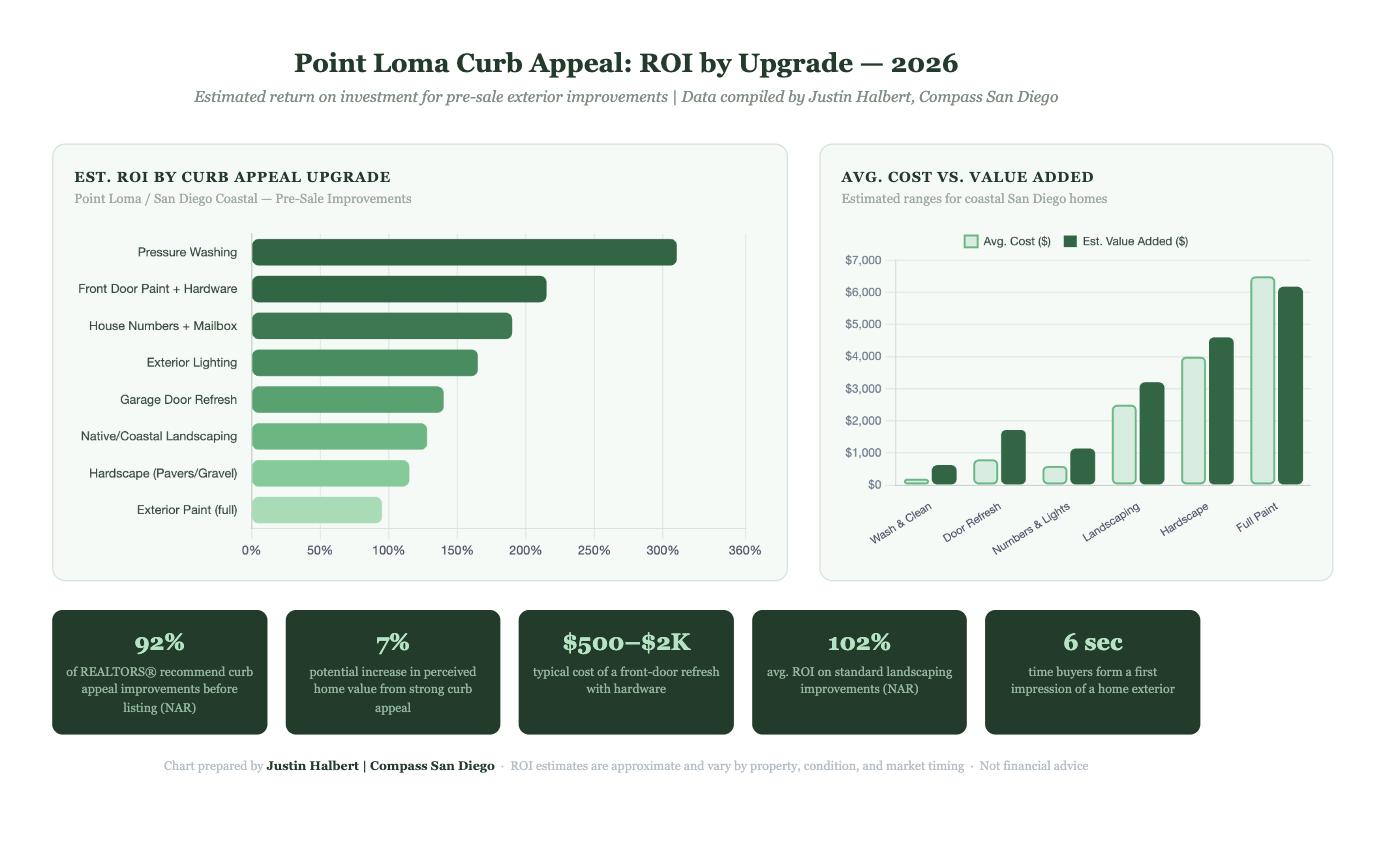
That's why curb appeal isn't a side project. It's part of your pricing and positioning strategy. A widely cited National Association of REALTORS® Remodeling Impact report found that 92% of REALTORS® recommend improving curb appeal before listing, and 97% say curb appeal is important for attracting buyers.
Practical rule: Buyers don't arrive neutral. The exterior tells them what kind of house they're about to see, and what kind of seller they think they're dealing with.
In coastal San Diego, the challenge is more specific than generic advice admits. You're not just making a house "cute." You're balancing salt air, sun exposure, water-conscious landscaping, and architecture that often depends on clean lines and open views.
That means the right curb appeal plan is disciplined. Protect the architecture so landscaping doesn't bury the façade. Respect the coast by choosing materials and finishes that handle marine air. Sell the lifestyle so the entry feels calm, bright, and move-in ready. Preserve sightlines so buyers can read the front elevation clearly from the street. The sellers who get this right don't necessarily spend the most. They make sharper choices.
The Weekend Makeover for Instant Impact
If you want to know how to improve curb appeal quickly, stop thinking about "landscaping" first and think about visual defects. Dirt, stains, clutter, and neglected surfaces do more damage than a missing flower bed.
The right sequence: start with high-visibility cleaning and correction, then handle cracked concrete or asphalt, then refresh the front door and hardware, and finish with lighting and container planting.
What to do first
Don't overcomplicate this. Give yourself one weekend and hit the surfaces buyers see. Pressure-wash the obvious zones — driveway, front walk, porch, steps, low walls, and any siding or stucco that looks dull. Clean the glass, because dirty exterior windows make the whole property feel tired. Cut back overgrowth and trim shrubs away from paths, windows, lights, and house numbers. Remove visual noise: hoses, bins, kids' gear, faded mats, extra planters, and broken décor. Sweep everything. A clean walkway reads as maintenance, even before any upgrade happens.
What most sellers miss
A lot of homeowners waste time on decorative touches before fixing what's making the house look neglected. That's backward. If your walkway is stained and the porch light is crooked, fresh flowers won't save the impression. Buyers read disorder faster than they read style.
Clean first. Repair second. Style last.
For a Point Loma property, do a coastal-specific pass: check front hardware for rust, pitting, and faded finish. Look at painted surfaces for sun fade, salt wear, and chipping near the entry. Inspect concrete and pavers for efflorescence, cracks, and dark staining. Check outdoor lighting for corrosion, mismatched bulbs, and weak brightness.
The fastest visible wins
A front door refresh — even a repaint and cleaned hardware — can reset the whole façade. Replace the mailbox and house numbers if they look dated, because if they look dated, the house looks dated. Use fewer, larger container plants instead of a scatter of small pots. Do a lighting check at dusk: replace bulbs, clean glass, and make sure the path reads clearly. Many sellers realize they don't need a massive budget. They need editing.
High-ROI Upgrades to Maximize Value
Once the surface-level cleanup is done, it's time to spend where buyers notice. Not every exterior project carries equal weight. The smart move is to focus on upgrades that make the home look more intentional, more current, and better maintained.
Strong curb appeal can raise a home's perceived value by as much as 7%. In a premium coastal neighborhood, perceived value matters because buyers compare quickly and make assumptions even faster.
Start with the front door
The front door is the easiest place to create a luxury signal without doing a full exterior remodel. In Point Loma, I'd lean toward colors and finishes that complement coastal architecture — not fight it. Deep blue, muted green, charcoal, warm white, or a refined wood-tone look can all work depending on the house. The wrong move is trendy color for the sake of trend.
What matters: contrast so the door stands apart from the body color; finish quality since satin or low-sheen usually looks cleaner than high gloss on coastal exteriors; and hardware consistency so the knob, lockset, kick plate, and doorbell finish all match.
Upgrade the details buyers read as maintenance
Luxury buyers notice alignment. If the house has a nice entry but cheap-looking numbers, a faded mailbox, and tired sconces, the presentation breaks. The highest-return details tend to be small and specification-sensitive: house numbers that are larger, clean-lined, and easy to read from the street; architectural lighting fixtures that fit the home's style; a mailbox that isn't dented, peeling, or undersized; and gate hardware, because coastal air destroys cheap finishes quickly.
A garage door can also matter a lot if it dominates the front elevation. If yours is prominent and visibly dated, it may deserve attention before almost anything else.
Landscaping for the Point Loma Coastline
Most curb appeal advice gets landscaping wrong for coastal sellers. It assumes more plants automatically means more value. In Point Loma, that can backfire fast. Overplanted front yards often hide the architecture, clutter the approach, and create upkeep buyers don't want. Cleaner, climate-adapted plantings usually sell better than a yard trying too hard to feel lush.
The average household uses about 30 percent of its water outdoors, which is one reason water-efficient yard design is a practical curb appeal decision — not just an environmental one.
Frame the house, don't hide it
This is the core design rule. Landscaping should support the home, not swallow it. That's especially relevant in coastal neighborhoods where mature planting can easily block windows, flatten architectural lines, and make the lot feel smaller. If you're improving curb appeal in a view-oriented area, cut back anything that interferes with: the line from street to entry, the visibility of the front door, the shape of the façade, and natural light into front-facing rooms.
A clean sightline often adds more sophistication than another layer of planting.
Choose plants and materials that fit the coast
For Point Loma, I prefer a restrained, sculptural palette over fussy seasonal color. That means using plants and materials that handle sun, wind, and salt air without constant drama. Good examples include agave, aloe, succulents, bougainvillea used selectively, and structured grasses or low-water shrubs that won't sprawl into the architecture. You don't need a botanical collection. You need rhythm, texture, and order.
Hardscape matters just as much. Clean edging, decomposed granite, gravel bands, simple pavers, and crisp stepping paths can make the whole front yard feel more expensive with less maintenance. A strong coastal front yard has defined edges with clear borders, negative space where gravel or mulch lets the eye rest, one focal move like a specimen plant or strong path to the door, and pruning discipline so nothing brushes the house or covers windows.
Staging the View and Leveraging Expert Help
A Point Loma buyer often decides how expensive a home feels before stepping inside. They pull up, catch the front elevation, notice the ocean light, and scan for signs of care. If the exterior feels cluttered, harsh, or generic, the price ceiling drops in their mind.
Finish the job by staging the exterior for both private showings and listing photos. Coastal homes sell on mood as much as condition, so the entry needs to feel edited, calm, and aligned with the architecture. Spanish, coastal contemporary, and traditional homes all benefit from restraint. Too much furniture, too many accessories, or lighting that feels theatrical cheapens the impression.
Stage the exterior like a luxury showing
Keep porch seating spare — a single bench or one pair of clean-lined chairs is usually enough. Scale planters to the entry, because undersized pots look temporary. Use warm, controlled lighting to highlight the path, door, and architectural lines, and avoid bright fixtures that create glare in coastal dusk. Clear operational clutter: hoses, package bins, security signs, extra mats, pet gear, and anything sun-faded. In Point Loma, timing the listing photos matters — soft late-day light or a clean twilight shot usually reads better than a flat midday exterior.
Use expert support to speed up the prep
Sellers often know what needs attention but stall on cost, scheduling, and vendor management. That delay hurts momentum, especially in a market where polished homes attract faster, stronger offers.
One practical option is working with Justin Halbert — REALTOR® at Compass — who uses Compass's pre-sale systems, including Concierge for approved improvements with no upfront costs, along with staging and launch strategy to position homes before they hit the broader market. That approach fits coastal listings well because the prep work needs to be selective: spend on the items buyers notice first, protect the home's architectural style, and avoid projects that add cost without raising perceived value.
The sellers who get premium attention treat curb appeal as part of pricing strategy. They stage the exterior, frame the best sightlines, and use professional support to get the home market-ready without wasting money.