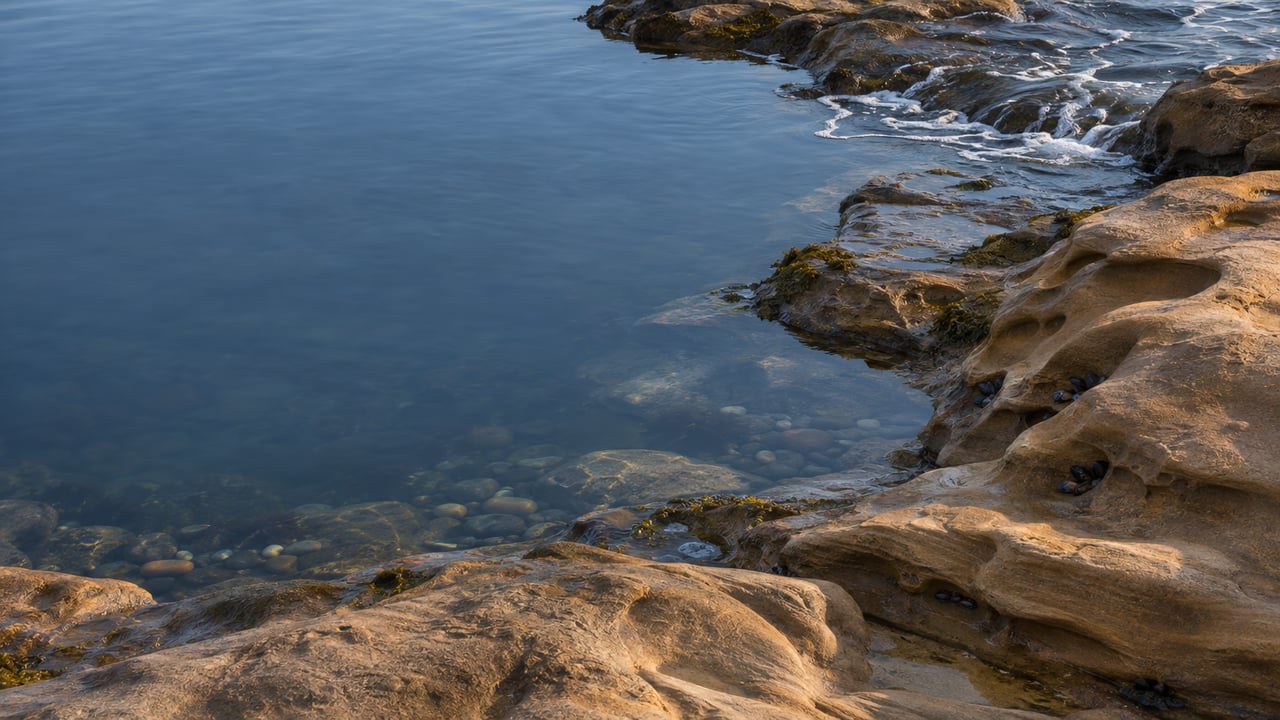
The lowest tide of Thanksgiving week at Cabrillo National Monument comes on Wednesday, November 25, at 3:55 pm, when the water is predicted to drop to −1.51 feet. The tidepools close 35 minutes later. On Thursday the tide is almost as low, at −1.40 feet, but it bottoms out at 4:46 pm, on Thanksgiving Day, when the whole park is closed. Christmas week repeats the pattern a month later. If you live on the peninsula, the best tidepool afternoons this winter are a day or two before the dates that look best on the chart, and most of them fall on weekdays.
Why the lowest afternoons run up against the 4:30 closing
The National Park Service publishes tide predictions for Cabrillo based on the Scripps Pier in La Jolla. It notes that the times differ only slightly at the monument. Late fall and winter are tidepool season because that is when the extreme low tides come in daylight. In summer the deep lows come at night, and the daytime lows don't drop far enough to show much. According to the park, a tide of 0.7 feet or lower gives you the best chance to explore.
Hours set the limit. The main park is open 9:00 am to 5:00 pm, but the tidepools and the Coastal Trail close at 4:30 pm. The main gate closes at 5:00, and nobody can come in after that on foot, by bike or by car. The park is closed all day on Thanksgiving and Christmas.
The tide chart shows why this matters. During a winter minus-tide run, each day's low comes roughly 40 to 50 minutes later than the day before, and it keeps getting lower for several days. Thanksgiving week shows it clearly. The Saturday, November 21 low is 0.19 feet at 12:56 pm. By Wednesday the low is −1.51 feet at 3:55 pm. On Friday, November 27, it is −1.12 feet at 5:41 pm, after the gate has closed. The tide keeps getting lower while the hours stay the same, so the lowest days of a run fall in the last hour before the tidepools close, and the days after them fall past closing or on a holiday.
The park recommends arriving about two hours before low tide and staying as long as two hours after, as long as you're out by 4:30. If the low comes at 3:55, you see the tide go out but not much of its return. If it comes at 2:20, you get the whole cycle.
Thanksgiving week: Sunday through Tuesday
These are the predicted lows for the coming week, with the tidepool hours applied:
| Date | Predicted low | Time | Tidepool access |
|---|---|---|---|
| Sun., Nov. 22 | −0.51 ft | 1:38 pm | Full window |
| Mon., Nov. 23 | −1.05 ft | 2:21 pm | Full window |
| Tue., Nov. 24 | −1.40 ft | 3:06 pm | About 85 minutes after low |
| Wed., Nov. 25 | −1.51 ft | 3:55 pm | 35 minutes after low |
| Thu., Nov. 26 | −1.40 ft | 4:46 pm | Park closed for Thanksgiving |
| Fri., Nov. 27 | −1.12 ft | 5:41 pm | After the 5:00 pm gate closure |
Monday the 23rd has the best balance. At −1.05 feet it is well below the park's 0.7-foot mark, and a 2:21 pm low gives you time on both sides. Tuesday goes nearly half a foot lower and still leaves you most of the incoming tide. If you can only go on a weekend, Sunday the 22nd is the choice. Its −0.51 feet is less dramatic, but it is still a real minus tide, early enough in the afternoon that you can arrive around noon.
December's run peaks on Christmas Eve
December has two runs. The first, smaller one starts the first weekend of the month. Saturday, December 5 drops to −0.19 feet at 1:27 pm and Sunday, December 6 to −0.50 feet at 2:04 pm. The low reaches −0.72 feet at 3:11 pm on Tuesday the 8th, then starts coming back up.
The second run is the deepest of the year so far, and it falls during the holiday week. Sunday, December 20 drops to −0.23 feet at 12:48 pm. After that the lows are −0.94 feet at 1:33 pm on Monday the 21st, −1.48 feet at 2:17 pm on Tuesday, −1.80 feet at 3:02 pm on Wednesday and −1.88 feet at 3:47 pm on Thursday, December 24. Christmas Eve is a regular day at the park, so the year's lowest afternoon tide to date is open to visitors, with 43 minutes left before the tidepools close. On Christmas Day the tide is −1.71 feet at 4:33 pm with the park closed, and on Saturday the 26th it is −1.35 feet at 5:18 pm, after the gate has closed.
Wednesday, December 23 is the best afternoon of the month. At −1.80 feet and 3:02 pm, it is lower than anything in the Thanksgiving week and early enough to leave time on both sides of the low.
January is the exception
The January 2027 run is the only one this winter whose lowest day falls in the middle of the afternoon. The lows go from −0.56 feet at 12:42 pm on Monday, January 18 to −1.21 feet at 1:26 pm on Tuesday the 19th and −1.67 feet at 2:08 pm on Wednesday the 20th. The bottom is −1.89 feet at 2:48 pm on Thursday, January 21, followed by −1.87 feet at 3:27 pm on Friday. Saturday the 23rd still reaches −1.61 feet, but not until 4:05 pm. On Sunday the 24th the −1.14-foot low comes at 4:41 pm, 11 minutes after the tidepools close.
Early January has a shallower run. It starts at −0.29 feet at 1:23 pm on Sunday, January 3, and stays between −0.56 and −0.78 feet from Monday the 4th through Friday the 8th, with the low coming later each day, from about 2:00 to about 4:00 pm.
The timing also lines up with the whales. The Park Service says gray whales pass San Diego mostly from late December through February, with the migration peaking in mid-January. It names the Kelp Forest Overlook and the high ground around the Old Point Loma Lighthouse as good places to watch. From January 19 through 22, you can spend the early afternoon on the rocks and climb back up the hill before the 5:00 pm gate closure.
Where the rocks are open, and where they haven't been since 1996
The Tidepool Protection, Education and Restoration Program, known as TPERP, turned 30 on November 9. The Cabrillo volunteers' anniversary post reprints former Superintendent Terry DiMattio's 1996 explanation of how the program started. A study by marine biologists Gary Davis and John Engle had found that 7 of 23 key indicator species had declined or nearly disappeared over the previous 20 years. California mussels fell 87% and thatched barnacles 75% over that period, and abalone and ochre sea stars were nearly gone. Those figures describe the tidepools before 1996. They are not counts of what lives there now.
The program changed the shoreline in a way you can still see. Zone 3, the southern stretch that starts just south of the Navy facility, was closed to the public in 1996 for recovery and as a scientific control. Zones 1 and 2 stayed open. In the 1990s those two zones drew about 90% of tidepool visitors, and Zone 1, at the main access point, got the most use. The same post compares 70,000 to 90,000 tidepool visitors a year in the mid-1990s with more than 400,000 a year now. TPERP volunteers still walk Zones 1 and 2 at low tide and staff an education table near the tidepool trail entrance, according to the Cabrillo National Monument Foundation.
To reach the pools, drive down Cabrillo Road to Gatchell Road. There are three Tidepools lots there, and Lot 1 is closest to the entrance. All three have limited parking. The Coastal Trail starts from Lot 1 or Lot 2 and is a one-mile round trip, open 9:00 am to 4:30 pm. When the lower lots fill, rangers temporarily hold traffic on the road until spaces open up. The Park Service recommends driving over walking down Cabrillo Road, because the road is narrow and has no shoulder. On a weekday at 1:00 pm, the lower lots are more likely to have space than on the weekend afternoons when the park says parking fills fast.
There is no cell service at the tidepools, so set a pickup time in advance if someone is driving you. The Park Service recommends closed-toe shoes with soles that grip wet algae. On the lowest days, the park's guide says to look in the low zone for octopus, sea hares, nudibranchs, sea stars and spiny lobsters. Those animals are uncovered only when the tide drops this far.
Two visits pay for the annual pass
The Park Service lists entry at $20 per private vehicle and $10 per person on foot or bicycle. The Cabrillo National Monument annual pass costs $35 and is good for 12 months, according to the NPS fee page, last updated in March 2026. This winter has usable minus tides in November, early and late December, and twice in January, so two visits by car already cost more than the pass.
The calendar has one more good pairing. The Cabrillo National Monument Foundation holds its Whale Watch Festival on Saturday, February 6, 2027, from 9:00 am to 4:00 pm, with exhibitors, speakers and whale watching from land. The day before, Friday, February 5, the tide drops to −0.74 feet at 3:02 pm. With the pass, that's a Friday afternoon at the tidepools and a Saturday on the bluff, without paying at the gate either day.
These are tide predictions, not guarantees. Swell and weather change what is actually exposed on any given afternoon, and the Park Service tide tables are the place to check before you go. For more on the lower end of the peninsula, see our Point Loma neighborhood guide and our earlier look at how Point Loma's fall season begins.
Justin Halbert works on the peninsula block by block, including the streets closest to the lighthouse end. If you're weighing a home near the lighthouse end of Point Loma, or getting one ready to sell, schedule a strategy call and start with the details that matter on your block.